After Root Canal Therapy — Post-Operative Instructions
What Is Root Canal Therapy?
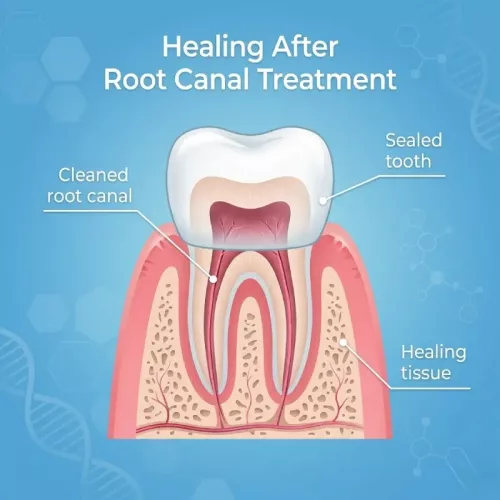
Root canal therapy is an endodontic procedure that removes infected or damaged tissue (the “pulp”) from inside your tooth. After the canals are cleaned and shaped, they are filled and sealed to prevent future infection.
This treatment saves the natural tooth and relieves pain. A temporary filling has been placed today to protect the tooth until your permanent crown is ready. Following these care instructions — especially the crown timeline — is critical for long-term success.
Your After-Care Instructions
Immediately After Your Appointment
The first 30 minutes are critical for your temporary filling
First 30 Minutes
Do not eat or drink. Your temporary filling needs ~30 min to fully harden.
If Numb
Do not chew until numbness has completely worn off.
ALSO
Chewing & Eating Guidelines
Protect the weakened tooth until your crown is placed
Critical
Do NOT chew on the treated tooth until the permanent crown or filling is placed.
- Ice, hard candy, nuts, and pretzels — these can fracture the weakened tooth
- Sticky foods such as gum and caramels — these can pull on the temporary filling
- Chew on the opposite side of your mouth until your permanent crown is placed
Temporary Filling Care
What's normal and what needs attention
Normal
The temporary filling may wear down or "divot" slightly with use over time.
Call Us
It is uncommon for the filling to fall out completely. If this happens, contact our office.
If Filling Comes Out After Hours
Place a small amount of over-the-counter temporary dental filling material (available at most pharmacies) until you can be seen.

Discomfort & Healing
What's normal during recovery
Mild to moderate discomfort is normal for 2–3 days following treatment. In some cases, soreness of the tooth or surrounding tissues may last up to a few weeks.
Common causes of post-treatment soreness include:
Jaw joint fatigue from keeping your mouth open
Injection site tenderness at the anesthetic location
Gum irritation from the rubber dam used during treatment
Pain Management
Over-the-counter options for most patients
Recommended
Ibuprofen
for up to 2 days
3 tablets of Advil, Motrin, or generic
If Unable to Take Ibuprofen
Acetaminophen
2 Extra Strength Tylenol or generic
Important
Prescribed Medications
If antibiotics or other medications were prescribed
- Take medications exactly as directed by your dental team
- Complete the full course of antibiotics unless instructed otherwise by your doctor.
Oral Hygiene
Continue your normal routine
When to Contact Our Office Immediately
Prompt care helps prevent complications. Please call us if you experience any of the following:
- Severe or increasing pain after several days
- Signs of infection — fever, foul taste, or drainage
- Difficulty chewing or a sudden change in your bite
- Swelling that worsens or does not improve
- Loss of the temporary filling
- Any symptoms that concern you — when in doubt, call us
When in doubt, call us.
Frequently Asked Questions
Is pain normal after a root canal?
Yes. Mild to moderate discomfort for 2 to 3 days is normal. Some soreness may last longer in certain cases. Over-the-counter pain relievers such as ibuprofen (600 mg every 6 hours) or acetaminophen (1,000 mg every 6–8 hours) can help manage discomfort. If pain is not controlled, contact our office at 903-583-7786.
Why do I need a crown after a root canal?
Can I chew on the treated tooth after a root canal?
What if my temporary filling falls out?
Contact our office at 903-583-7786 as soon as possible. If it happens after hours, you may place a small amount of over-the-counter temporary dental filling material — available at most pharmacies — until you can be seen.
What pain medication should I take after a root canal?
When should I call the dentist after a root canal?
We're Here for Every Step of Your Recovery